


SEPAR
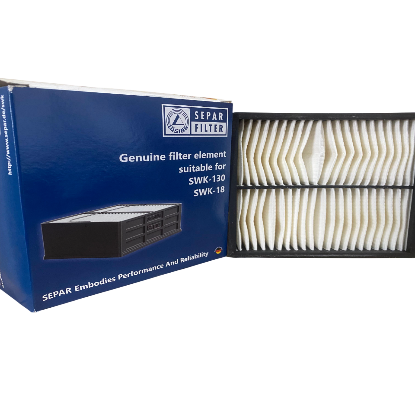
ELEMENT WATER SEPAR 01830
ELEMENT WATER SEPAR 01830
Couldn't load pickup availability
The SEPAR 01830 is a heavy-duty replacement filter element engineered for the high-capacity SWK-2000/18 series fuel water separators. Designed for industrial and large-scale marine applications, this element serves as the final filtration stage in the SEPAR 5-stage centrifugal system, providing critical protection for high-performance diesel engines.
Technical Specifications
| Feature | Specification |
|---|---|
| Compatibility | Separ SWK-2000/18 series (including /18/M and /18/U variants) |
| Dimensions (Individual) | 5 13/16" x 5 7/8" x 2 1/8" (approx. 148mm x 149mm x 54mm) |
| Micron Rating | 30 Microns |
| Flow Rate Capacity | Designed for high-flow systems up to 18 L/min (1,080 L/h) |
| Media Material | Resin-impregnated pleated cellulose |
Core Functional Features
- High-Capacity Filtration: Engineered with an increased surface area to manage the significantly higher flow rates of the SWK-2000/18 system without causing excessive pressure drop.
- Enhanced Hydrophobic Barrier: The specialized resin-impregnated media repels water with up to 99.9% efficiency, preventing moisture from reaching sensitive fuel injectors and high-pressure pumps.
- Industrial-Grade Durability: Built to withstand the rigorous demands of large industrial generators, commercial vessels, and heavy-duty infrastructure projects.
- Backflush Optimization: The robust pleat structure is designed to be cleaned via the system's backflushing valve, effectively extending the interval between full element replacements.
Maintenance & Performance Monitoring
For large-scale operations, maintaining fuel purity is essential for protecting operating margins. It is recommended to monitor the vacuum gauge on the SWK-2000/18 housing regularly. Any significant increase in vacuum suction indicates that the element is reaching its dirt-holding capacity and requires a backflush or replacement.
Standard service intervals typically range between 500 and 1,000 operating hours, though this may vary based on local fuel quality and environmental conditions.

.png)